Fresno, CA Real Estate Investment Guide
Fresno is one of the Central Valley's more accessible, yield-positive real estate markets heading into the second half of 2026: sub-coastal acquisition costs, single-family rental yields that outpace most California metros, and a diversifying economy with durable tenant demand across every price tier. Whether you're targeting a cash-flowing duplex near Fresno State, a luxury estate in North Fresno's premier enclaves, an affordable entry-level rental in an established residential corridor, or a rancho or ranchito with land and agricultural potential on the city's outskirts, there's a viable entry point here for most capital tiers and risk profiles. This guide covers what makes the market worth a serious look this year, which property types line up with which strategies, and what current local conditions mean for your next move.
Why Fresno Stands Out for Real Estate Investment in 2026
Fresno ranks among the stronger investment markets in California for one clear reason: the rent-to-price ratio still works. According to ATTOM's 2026 Single-Family Rental Market Report (published March 2026), Fresno County posted a potential gross rental yield of approximately 6.9% in 2026, up from 6.5% the prior year and the fifth-largest yield increase among large-population California counties. That figure compares favorably to coastal metros where yields compress to the low-to-mid single digits as home prices outpace rent growth.
| County | Potential Gross Rental Yield (2026) |
|---|---|
| Fresno County, CA | 6.9% |
| Alameda County, CA | 4.5% |
| Orange County, CA | 4.5% |
| Santa Clara County, CA | 3.1% |
Source: ATTOM 2026 Single-Family Rental Market Report, published March 2026
The economic base is broader than many outsiders assume. Agriculture and logistics anchor employment, but healthcare, higher education (California State University, Fresno), and regional distribution are adding jobs and drawing workers who rent rather than buy. Population growth continues to filter in from the Bay Area and Southern California as households look for affordability without giving up access to urban infrastructure.
On the supply side, Fresno County's unsold inventory index stood at 3.5 months in July 2026, essentially flat compared with 3.5 months a year earlier, and down from a seasonal high of 5.6 months in January 2026. The county's median sold price for existing single-family homes was $450,000 in July 2026, up 2.3% year-over-year and up 4.7% from June's $429,820.
Aggregated residential sales data for the greater Fresno metro market (three months ending June 2026, sourced from Fresno County MLS) reflected an average sold price near $482,000 and approximately 505 closed transactions, up roughly 10% year over year, with an average of 44 days on market.
Stable-to-rising prices, a reasonably balanced inventory picture, growing transaction volume, and yields that are still moving in the right direction: that combination is the kind of environment where a patient investor can find value without getting squeezed on acquisition cost and gross income at the same time.
The Four Investment Tiers: Matching Capital to Strategy
Fresno's investment market is accessible at four distinct price tiers, affordable, mid-range, luxury, and agricultural ranchito, each with a different return profile, financing structure, and management requirement. Here's how each one breaks down.
Affordable Properties: High Yield, Deep Tenant Demand
At the entry level, Fresno's older residential corridors, concentrated in central, southwest, and west Fresno, generate strong gross yields because acquisition prices are low relative to prevailing rents. The tenant pool here is deep and durable: working families, service-sector employees, and long-term renters priced out of homeownership form a consistent demand base that isn't especially sensitive to seasonal swings.
Duplexes and triplexes in this segment are attractive for investors scaling early because 2 to 4 unit properties generally qualify for conventional residential financing, including FHA loans, allowing entry with lower down payments than commercial deals require. Vacancy in one unit of a triplex still leaves income flowing from the others, reducing the all-or-nothing income risk of a single-family rental.
The trade-off is management intensity. Older stock requires more maintenance capital, and tenant turnover in affordable segments tends to run higher than in mid-range neighborhoods. A reasonable planning figure is 1.5% to 2% of property value set aside annually for maintenance and capital expenditures.
Mid-Range Properties: Stability, Tenant Quality, and Value-Add Opportunity
The bulk of Fresno's housing stock sits in the mid-range band, and it attracts the tenant profile that minimizes vacancy and turnover: dual-income families, professionals, and households that treat a rental as a long-term home. These properties concentrate across established neighborhoods in northeast and northwest Fresno, portions of the Clovis Unified School District boundary, and transitional corridors closer to Highway 99.
Properties in this range suit the BRRRR strategy (buy, renovate, rent, refinance, repeat) when targeting lightly distressed homes. The spread between a deferred-maintenance property and a fully renovated comparable in the same Fresno neighborhood is often meaningful enough to justify renovation budgets with a 15% to 20% contingency while still producing a cash-flow-positive outcome after refinancing. Focus renovation capital on kitchens, bathrooms, and curb appeal: those three inputs drive the most measurable impact on rental rates and resale velocity.
Short-term rentals are a viable mid-range option for well-positioned properties. Homes within reasonable distance of Fresno State see demand spikes during graduation, athletic events, and the academic calendar, while proximity to Community Regional Medical Center supports traveling medical professionals year-round. The City of Fresno requires STR registration and collection of transient occupancy tax; verify current municipal requirements before building any income projections around short-term occupancy.
Luxury Properties: Appreciation, Prestige, and Selective Demand
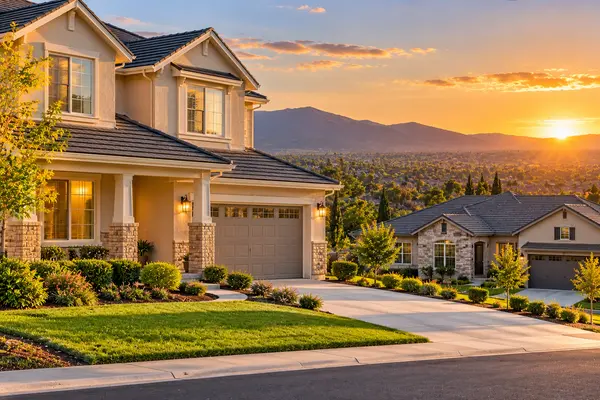
North Fresno contains the market's luxury tier, gated communities, estate lots, custom builds, and established enclaves such as Copper River Ranch, the Woodward Park corridor, and the historic Fig Garden neighborhood, and it makes its case through a straightforward comparison with coastal California. A finished custom home that would carry a coastal price tag in the multiple millions trades at a fraction of that cost here, opening the luxury segment to buyers who want premium finishes, generous lot size, and neighborhood quality without the coastal premium tied to land scarcity and regulatory burden.
Acquisition prices in this segment are substantially higher than the county median, and gross rental yields compress accordingly. Luxury properties are generally held for appreciation, equity accumulation, and tax efficiency rather than raw cash-on-cash return. Investors in this tier typically target long-term appreciation, owner-occupied primary or second-home use with periodic rental income, or structured rent-to-own arrangements with well-qualified buyer-tenants who need time to build a down payment.
Ranchos and Ranchitos: Land, Lifestyle, and Long-Term Upside
The rancho and ranchito category is one of Fresno's most distinctive investment niches: small-acreage properties that blend residential living with agricultural land, typically 1 to 5 acres on the city's rural perimeter up to 20 to 40 acre parcels in the surrounding county. These properties appeal to a specific and underserved buyer and renter profile: families seeking space and privacy, equestrian households, and lifestyle buyers migrating from denser coastal markets who want land without leaving California.
From an investment standpoint, ranchos and ranchitos offer several layered value drivers:
- Land banking. Properties along Fresno's expanding growth corridors, particularly in southeast Fresno and areas adjacent to proposed development, hold speculative upside as the city builds outward and infrastructure follows.
- Agricultural income. Parcels with existing plantings (citrus, almonds, table grapes) or livestock capacity can generate supplemental income through ground leases or direct farming operations while the investor holds for appreciation.
- Premium rental rates. Lifestyle tenants willing to pay above-market rents for privacy and acreage are a real and underserved segment; the supply of quality ranchito rentals is structurally limited.
- USDA financing eligibility. Many rural-adjacent Fresno County parcels qualify for USDA Rural Development financing, which expands the buyer pool when you eventually sell and supports exit liquidity.
Similar ranchito opportunities exist in neighboring Madera and Merced counties, where smaller-market dynamics can offer earlier-stage land value relative to Fresno's more developed growth corridors.
The complexity here lies in due diligence scope: water rights, irrigation district membership (such as through the Fresno Irrigation District), zoning classifications, existing plantings and their encumbrances, and infrastructure costs all require careful review. An agent with documented experience in agricultural-residential properties isn't optional in this category; mistakes here get expensive fast.
Investment Strategies: Matching Approach to Market Conditions
For Fresno investors in 2026, the most effective strategy depends on capital availability, risk tolerance, and time horizon. Current conditions, with inventory hovering near flat year-over-year and price appreciation moderate but positive, reward selectivity over speed across all of them.
| Strategy | Return Focus | Best Fit | Primary Risk |
|---|---|---|---|
| Buy-and-hold SFR | Cash flow + appreciation | Patient investors, first-time landlords | Vacancy, deferred maintenance |
| Small multifamily (2-4 units) | Risk-adjusted cash flow | Portfolio builders | Management intensity |
| Value-add / renovation | Forced appreciation | Investors with construction experience | Cost overruns, exit timing |
| Student housing (by-the-bed) | Gross income maximization | Owners near Fresno State | Seasonal turnover, lease structure |
| Agricultural land banking | Long-term appreciation | Diversified portfolios, patient capital | Illiquidity, zoning changes |
Buy-and-hold single-family rentals benefit from today's pricing, with less frenzied competition for deals than two years ago. Small multifamily (duplexes and fourplexes) offers a strong risk-adjusted profile for portfolio builders: multiple income streams from a single transaction, residential financing terms, and consistent demand in central Fresno corridors and near Fresno State. Value-add and renovation plays work when budgets are realistic and the exit strategy (flip versus hold) is decided before acquisition, since that decision drives the right level and style of finishes. Agricultural land banking suits patient investors with longer time horizons; near-term income from farming or livestock leases offsets carry costs while development pressure builds over years. Treat it as a specialist strategy rather than a first investment.
Central Valley markets including Modesto, Turlock, and Atwater share similar structural characteristics with Fresno: inland affordability, agricultural land adjacency, and growing commuter tenant bases, and investors active in Fresno often find natural portfolio extension opportunities across these neighboring markets.
Due Diligence Priorities for Fresno Investors
The most critical due diligence areas for Fresno investment properties, regardless of price tier, are zoning, water access, short-term rental regulations, HOA covenants, and insurance availability. Each carries real financial consequences if overlooked before closing.
Zoning and permitted uses. Fresno County's zoning framework distinguishes between residential, agricultural, agricultural-residential, and mixed-use classifications. Ranchito and rancho properties require a careful read of what the current designation permits, and what it prohibits, before any business plan is built around a specific use.
Water access. In the Central Valley, water is infrastructure. For any property with agricultural or large-lot residential use, confirm the water source (municipal, well, Fresno Irrigation District membership, or ditch water) and the current status of any water rights or district membership agreements before closing.
Short-term rental regulations. The City of Fresno requires registration and transient occupancy tax compliance for short-term rentals. Rules can and do change; verify current requirements directly with the City before underwriting STR income projections.
HOA covenants. Luxury communities in North Fresno often include CC&R provisions that restrict rental activity, subletting periods, or short-term use. Review all governing documents before purchase.
Insurance availability. California's property insurance market has tightened statewide. Confirm current carrier availability and premium ranges for the specific zip code, particularly for rural, ag-adjacent, or wildland-urban interface parcels in eastern Fresno County, before closing.
Making the Numbers Work Before You Commit
The mortgage calculator on this site is a useful way to stress-test financing assumptions before engaging a lender. If you're an existing owner evaluating a Fresno property for refinance or a 1031 exchange, a free home valuation establishes a current market value baseline before you approach a lender or intermediary, and the local market snapshot gives a current read on county-level conditions. These are the kinds of inputs that support a disciplined Fresno investment strategy before any capital gets committed.
Frequently Asked Questions
- Is Fresno, CA a good market for real estate investment in 2026? Fresno offers a favorable investor environment relative to most California markets in 2026. According to ATTOM's 2026 Single-Family Rental Market Report, Fresno County's potential gross rental yield reached approximately 6.9%, up from 6.5% the year prior and the fifth-largest yield increase among large-population California counties. The California Association of REALTORS® reported the Fresno County median sold price at $450,000 in July 2026, up 2.3% year-over-year, with unsold inventory sitting at 3.5 months, essentially flat compared to a year earlier. That combination of rising rents relative to price and stable supply gives buyers reasonable negotiating room without signaling a market in distress.
- What property types generate the best returns in Fresno? For cash flow, small multifamily properties (duplexes and triplexes) and entry-level single-family rentals in established corridors deliver the strongest rent-to-price ratios. For long-term appreciation and equity, luxury properties in North Fresno offer premium quality at a meaningful discount to coastal California pricing. Ranchos and ranchitos suit lifestyle-investor strategies and land-banking plays. Student housing near Fresno State benefits from predictable academic-cycle demand when structured with a by-the-bed lease model.
- What is a ranchito in Fresno real estate? A ranchito (or rancho) is a small-acreage property, typically 1 to 40 acres, combining a residential structure with agricultural land. These properties are common throughout Fresno County and neighboring communities such as Madera and Merced. They often include well water, irrigation infrastructure, existing crop plantings, or equestrian facilities. From an investment perspective, they offer lifestyle appeal, potential agricultural income, and long-term land value in growth corridors, but require specialized due diligence on water rights, irrigation district membership, and zoning before acquisition.
- How much should I budget for maintenance on a Fresno investment property? A standard planning figure is 1% to 2% of the property's value annually for maintenance and capital expenditures. Student housing and affordable-segment rentals tend to run toward the higher end of that range due to higher tenant turnover and use intensity. Older properties may need front-loaded capital investment in core systems (HVAC, plumbing, roofing) before annual maintenance costs normalize. For renovation projects, budget a 15% to 20% contingency above initial contractor bids regardless of how detailed the scope appears at signing.
- Where can I find Fresno investment properties currently for sale? Current listings, including investment-oriented single-family homes, multifamily properties, and land, are searchable through the listing search on this site. To establish comparable pricing before making offers, the sold listings page provides recent transaction history, and the local market snapshot aggregates current county-level conditions.
Categories
Recent Posts
GET MORE INFORMATION

Agent License ID: 02082288